How to Prepare a Garage Floor for Coating — and Why Diamond Grinding Matters
Planning a garage floor project in Virginia or West Virginia? Request your free on-site estimate.
Whether a garage floor coating lasts thirty years or peels in one comes down mostly to a step you'll never see in the finished floor: surface preparation. Here's what proper preparation involves, why diamond grinding concrete is the industry standard, and why acid etching — the method every DIY kit recommends — isn't good enough.
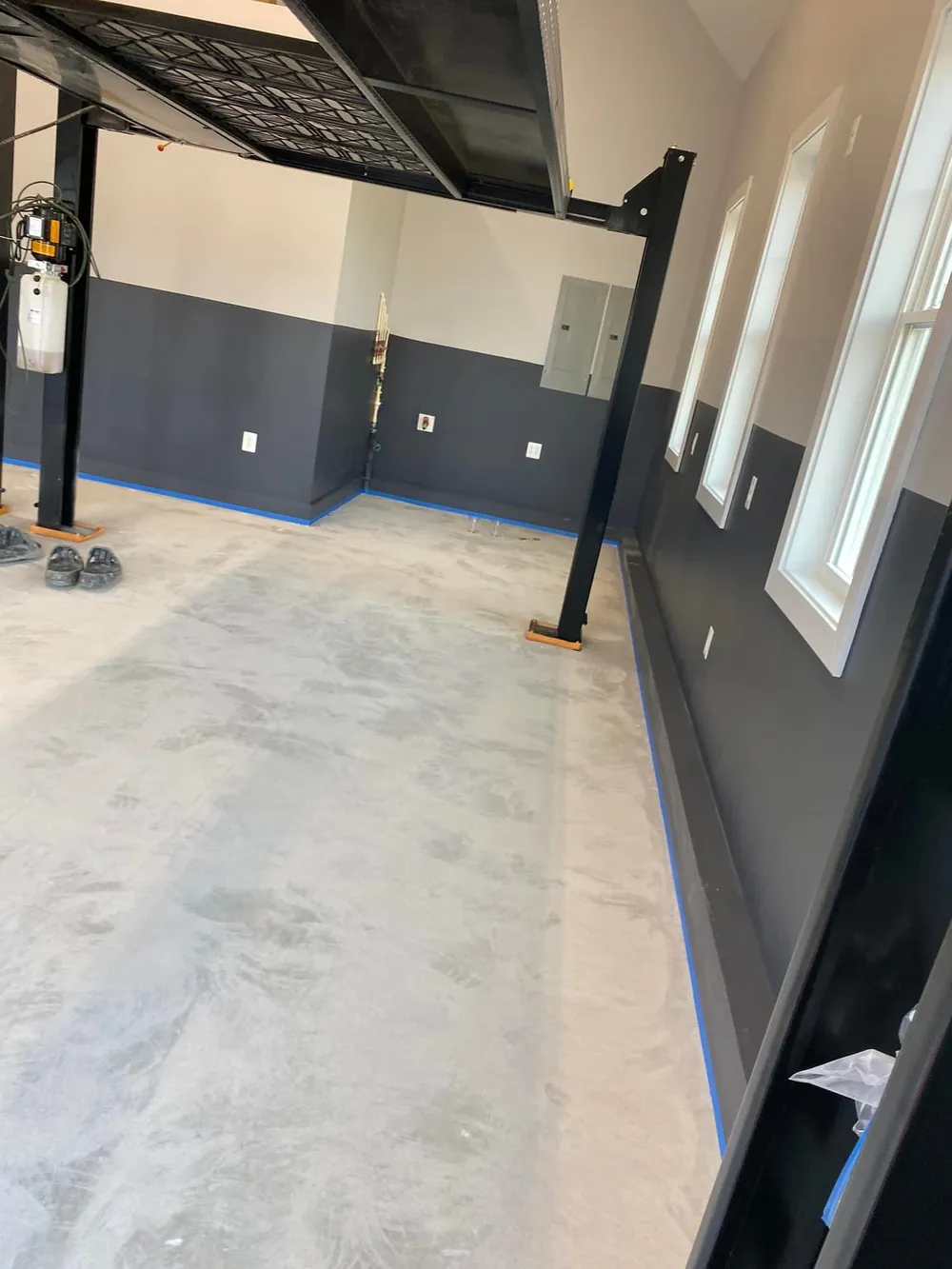
Why coatings fail without preparation
Cured concrete has a weak, dense top layer called laitance, plus years of absorbed oil, silicone, sealers, and grime. A coating applied over that layer bonds to the contamination, not the concrete. It may look perfect for months — then a hot summer tire or a cold winter snap lifts it. Preparation exists to remove that layer entirely and give the coating something structural to grip.
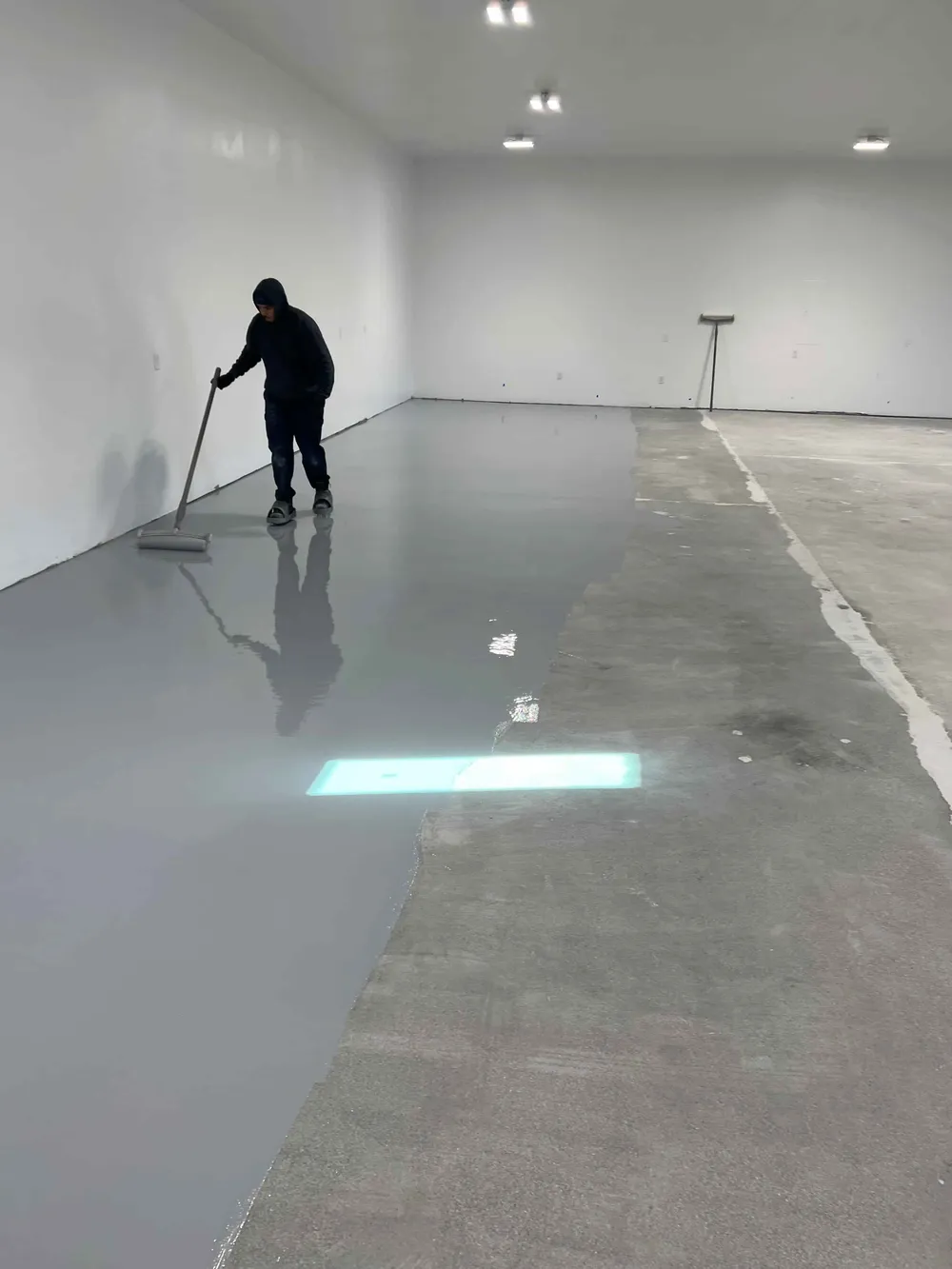
What diamond grinding actually does
Diamond grinding uses walk-behind machines with industrial diamond-segment discs to mechanically abrade the entire slab. It does three things at once:
- Removes the weak surface layer and any old paint, sealer, or failed coating down to sound concrete.
- Opens the concrete's pores, creating a surface profile the base coat can flow into and lock onto mechanically.
- Levels minor imperfections, so the finished floor is smooth and uniform.
Dust extraction vacuums run with the grinders, so a properly equipped crew does this without filling your garage — or your house — with concrete dust.
Diamond grinding vs acid etching
Acid etching (washing the slab with diluted acid) is what DIY kits specify because homeowners don't have grinders. Etching roughens the surface texture but leaves the laitance layer and contaminants in place, works unevenly wherever the slab has old sealer, and introduces water into the pores right before you coat. It's the single biggest reason DIY epoxy floors fail. No professional installer should be etching your floor — if a quote mentions it, keep shopping (our contractor hiring guide lists the other red flags).
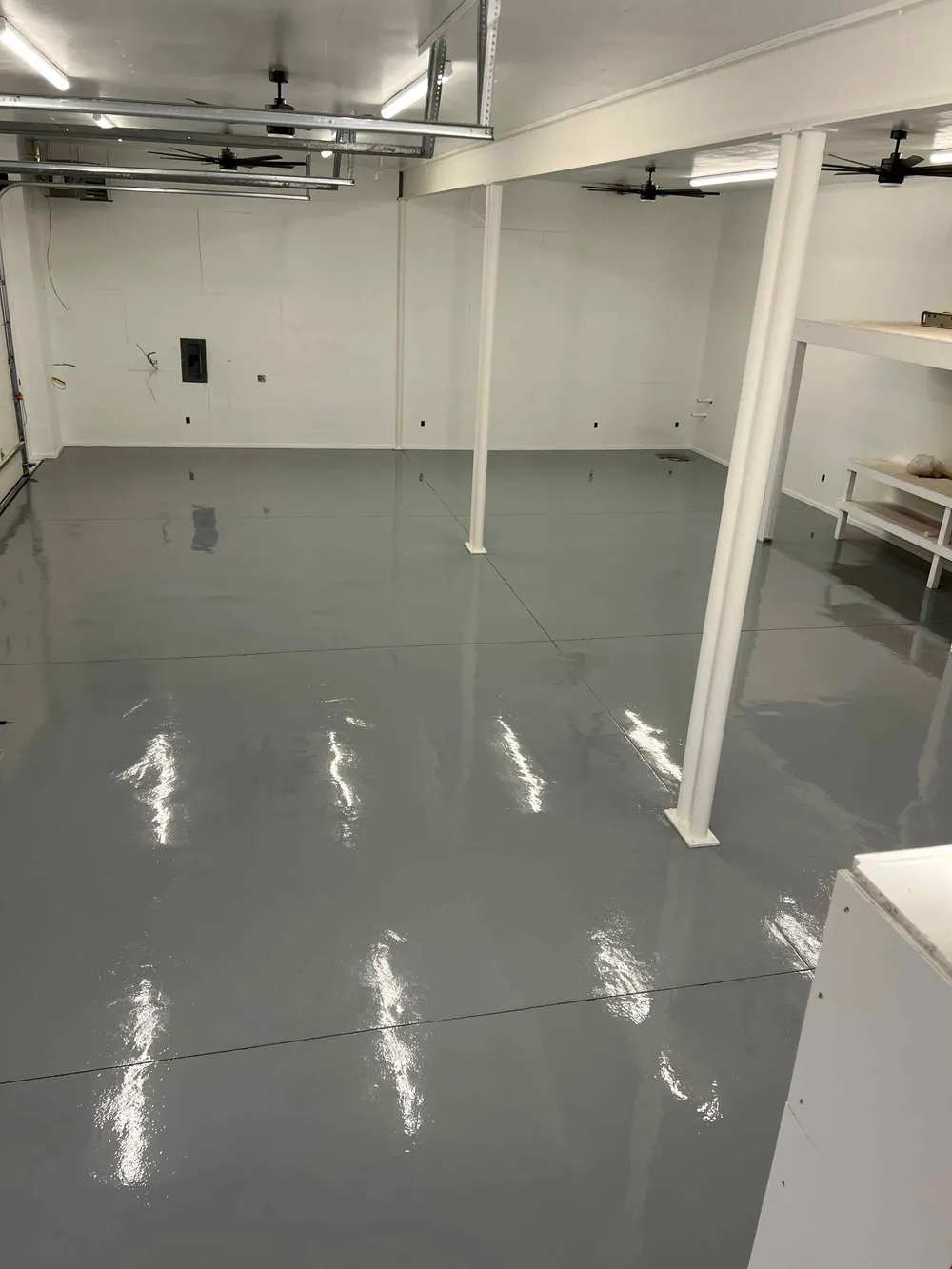
The rest of proper preparation
- Inspection and moisture check. Damp slabs need a moisture-tolerant primer; finding that out after coating is too late.
- Diamond grinding the full slab, edges included, with dust extraction.
- Crack and pit repair. Cracks are chased out and filled with structural fillers; pitting and spalling are patched and ground flush.
- Final vacuum and detail. The slab should be bare, porous, and clean immediately before the base coat goes down.
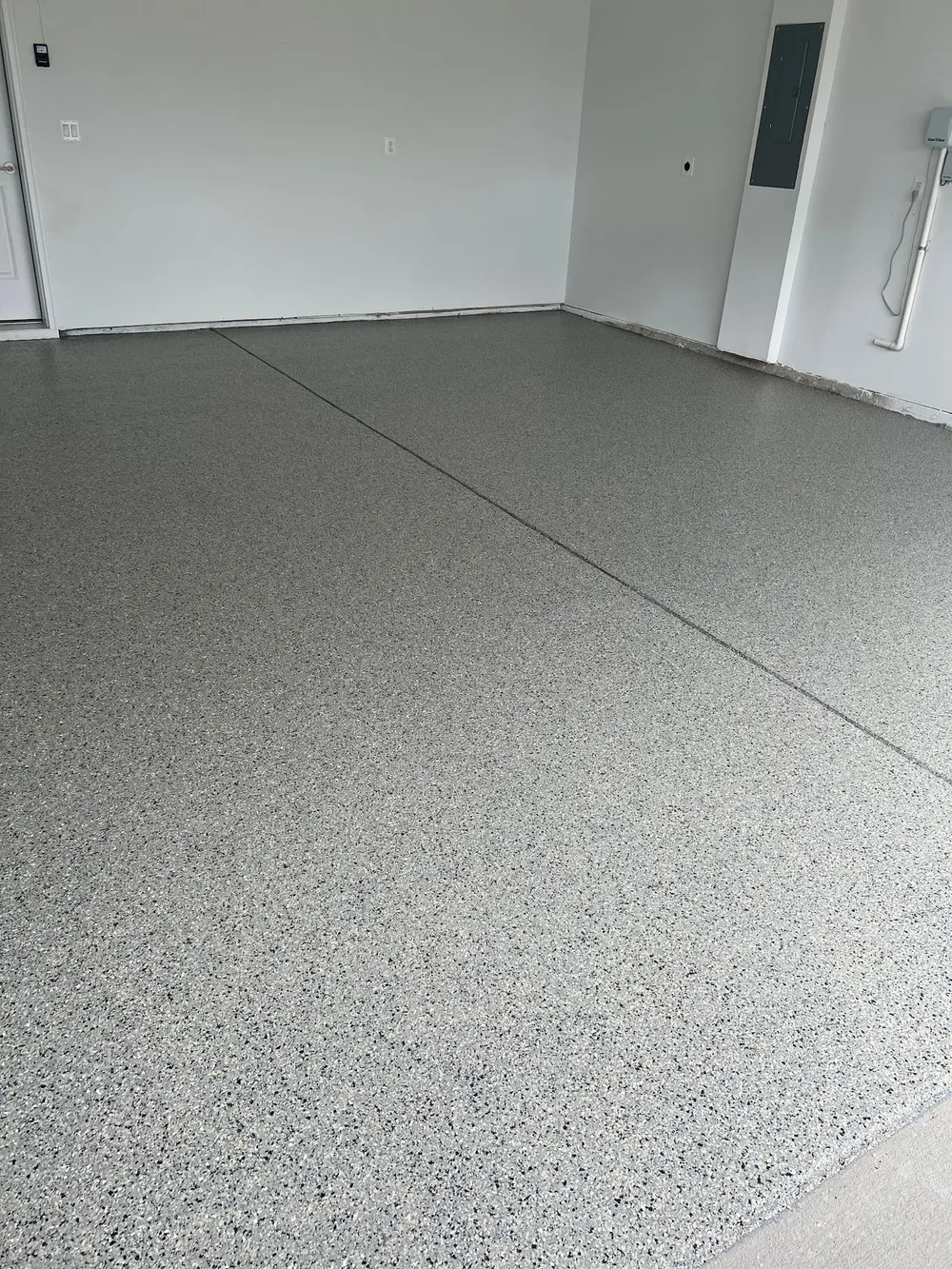
What this means when you're comparing quotes
Preparation requires specialized equipment and careful work. When choosing an installer, compare their preparation standards. Ask every contractor — including us — exactly how they prep. It's step two of our five-step process on every floor we install, and it's why we can put a warranty behind the result. Schedule a free estimate and we'll assess what your specific slab needs.
Ready for a Floor That Lasts?
Ultimate Garage Floors installs epoxy and polyaspartic floor coatings across Virginia and West Virginia. Estimates are free, on-site, and no-obligation.